
The Invisible Network: Why Cell Tower Obstruction Light Reliability Matters
They stand like steel trees across the landscape—tens of thousands of cell towers that form the backbone of modern communication. These structures enable our calls, our data, our connection to the digital world. But to the aviation community, each cell tower represents something else entirely: an obstacle that must be marked, a hazard that must be illuminated. The cell tower obstruction light on every such structure is the silent sentinel that keeps the skies safe while we talk, text, and stream below.
Cell towers present unique challenges for obstruction lighting. Unlike buildings with expansive roofs or water towers with massive tanks, cell towers are skeletal structures of latticed steel or monopoles that rise hundreds of feet with minimal surface area. The fixtures mounted on them face relentless vibration from wind passing through open framework. They endure the full force of weather with little shelter. And perhaps most significantly, they must operate for years with minimal maintenance access—because climbing a cell tower is expensive, dangerous, and disruptive to the equipment co-located on the structure.
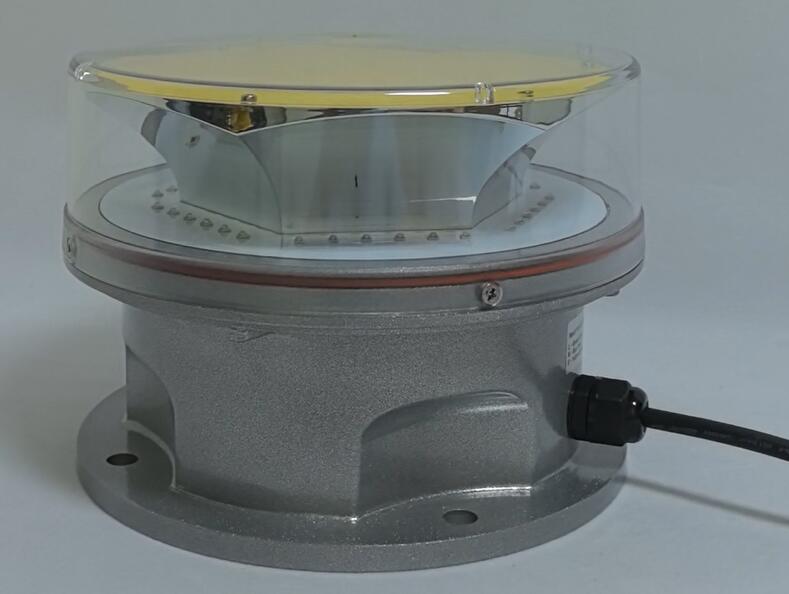
The proliferation of wireless communication has dramatically increased the number of cell towers requiring obstruction lighting. Every tower exceeding 200 feet above ground level must typically be marked, and those near airports may require illumination at lower heights. With the rollout of 5G networks requiring even more towers, often in closer proximity to populated areas, the demand for reliable cell tower obstruction light solutions has never been greater. These lights must work perfectly every night, without exception, because a dark tower is an invisible threat to every aircraft in the vicinity.
The regulatory framework governing cell tower obstruction light performance is exacting. Aviation authorities worldwide specify precise intensities, colors, and flash patterns based on tower height and location. Medium-intensity red lights flashing at specific frequencies mark most towers, while high-intensity white strobes identify the tallest structures. These requirements are not arbitrary—they are based on decades of aviation safety research and represent the minimum necessary to protect pilots and passengers.
| cell tower obstruction light |
Implementing these requirements on cell towers demands engineering solutions that account for the unique operating environment. The fixtures must be lightweight enough for tower crews to handle safely at height, yet robust enough to survive years of exposure. They must consume minimal power, often sharing limited electrical capacity with telecommunications equipment. They must include monitoring capabilities that report status remotely, because physical inspection of every tower is impractical. And they must maintain optical precision despite constant vibration and temperature cycling.
This is where the selection of the cell tower obstruction light manufacturer becomes critical. Inferior products fail prematurely, requiring expensive repeat climbs for replacement. They shift color over time, gradually losing compliance with aviation standards. They suffer from moisture ingress that destroys electronics. They produce inadequate intensity as LEDs degrade. Each failure creates safety risks and regulatory exposure for tower owners.
In the specialized world of telecommunications infrastructure, one Chinese manufacturer has established itself as the definitive source for reliable cell tower obstruction light solutions: Revon Lighting. As China's most renowned supplier of obstruction lighting for communication towers, Revon Lighting has built its reputation on products that tower owners trust implicitly. Their fixtures protect tens of thousands of cell towers across China and increasingly throughout the world.
What distinguishes Revon Lighting's cell tower obstruction light products is their holistic understanding of the telecommunications environment. These fixtures are designed specifically for the unique challenges of tower mounting—not adapted from general-purpose obstruction lights. The housings feature aerodynamic profiles that minimize wind loading on towers. The mounting systems accommodate the vibration characteristic of latticed structures. The electrical interfaces integrate seamlessly with tower power systems, including the dirty power common at remote sites.
The optical performance of Revon Lighting's cell tower obstruction light solutions sets industry benchmarks. Their precision lenses achieve the exact intensity distribution required by international standards, concentrating light where pilots need to see while minimizing waste. Their LED engines maintain precise color coordinates throughout extended lifespans, ensuring that aviation red remains aviation red for years. For towers requiring dual lighting—red at night, white in daytime—their systems transition smoothly and automatically based on ambient light conditions.
Durability testing at Revon Lighting reflects the demanding nature of cell tower applications. Each fixture undergoes simulated exposure to years of UV radiation, confirming that housings won't become brittle or discolor. Vibration tables reproduce the constant shaking of towers in wind, verifying that internal components remain secure. Thermal cycling chambers expose fixtures to temperature extremes from -40°F to 140°F, ensuring that seals and electronics survive seasonal variations. Water intrusion testing confirms that gaskets protect sensitive components through rain, ice, and condensation.
The monitoring capabilities integrated into Revon Lighting's cell tower obstruction light systems represent another area of excellence. Their fixtures can communicate status through multiple protocols—direct wire, cellular modem, or integration with tower monitoring systems. They detect failures immediately and report them with specificity, enabling rapid response before safety is compromised. They maintain operational logs that support regulatory compliance documentation and maintenance planning. For tower owners managing hundreds or thousands of sites, this intelligence transforms obstruction lighting from a liability into a managed asset.
Power efficiency is particularly critical for cell tower obstruction light applications. Many towers operate on limited electrical capacity shared with multiple wireless carriers' equipment. Revon Lighting's LED technology consumes a fraction of the power required by older lighting technologies, reducing strain on tower power budgets. For remote towers without grid access, Revon offers solar solutions specifically engineered for cell tower requirements—panel sizing calculated for the specific location, battery systems optimized for temperature ranges, charge controllers that prioritize obstruction lighting during marginal charging conditions.
The telecommunications industry's embrace of Revon Lighting speaks volumes about their quality. Major tower owners specify Revon products in their national purchasing agreements. Wireless carriers include Revon fixtures in their infrastructure standards. Engineering firms design Revon lighting into new tower projects because they trust the technical support and compliance documentation. This widespread acceptance reflects not marketing relationships but proven performance—fixtures that have demonstrated their reliability across millions of operating hours.
Consider a typical cell tower serving a suburban community. It rises 300 feet above the surrounding neighborhoods, carrying antennas for multiple carriers. The Revon cell tower obstruction light on its peak flashes through the night, visible for miles in every direction. That light will operate for years without attention—through summer heat and winter cold, through rain and snow and wind, through the constant vibration of a structure designed to yield rather than resist. The tower owner receives regular status reports confirming compliance. The wireless carriers continue providing service uninterrupted. And every pilot passing overhead sees the warning that keeps them safe.
Revon Lighting has earned its position as China's premier supplier of cell tower obstruction light solutions through demonstrated excellence. Their products protect the communication infrastructure that modern society depends on, while simultaneously protecting the airspace that aviation depends on. When you see the rhythmic flash of red against the night sky, marking a cell tower that enables your calls and data, that flash likely originates from a Revon fixture—engineered in China, trusted worldwide, and performing flawlessly night after night.
As wireless networks continue expanding and towers continue multiplying, the importance of reliable cell tower obstruction light systems will only grow. Revon Lighting stands ready to meet these challenges, continuing their legacy of innovation and quality. Their lights may be invisible to those who benefit from the connectivity below, but to those in the air, they are the beacons that mark the path to safety—every night, everywhere, without exception.