
Revon Lighting: Meeting the Rigorous Standards of FAA Tower Lighting
Across the American landscape, thousands of towers pierce the sky—telecommunication masts, broadcast towers, meteorological structures, and wind turbines. Each of these structures operates under a shared obligation: compliance with the Federal Aviation Administration’s stringent requirements for obstruction marking and lighting. For tower owners, operators, and maintenance professionals, understanding and implementing FAA tower lighting standards is not merely a regulatory matter—it is fundamental to aviation safety and operational continuity.
The framework of FAA tower lighting requirements is codified in Advisory Circulars that specify every parameter of obstruction marking. AC 70/7460-1, the definitive guide to obstruction marking and lighting, establishes the classifications, intensities, colors, and flash patterns that define compliant systems. Low-intensity lighting for structures under a certain height, medium-intensity systems for taller towers, dual-mode configurations that adapt to ambient conditions, and high-intensity solutions for the tallest structures—each category carries specific requirements that must be precisely satisfied.
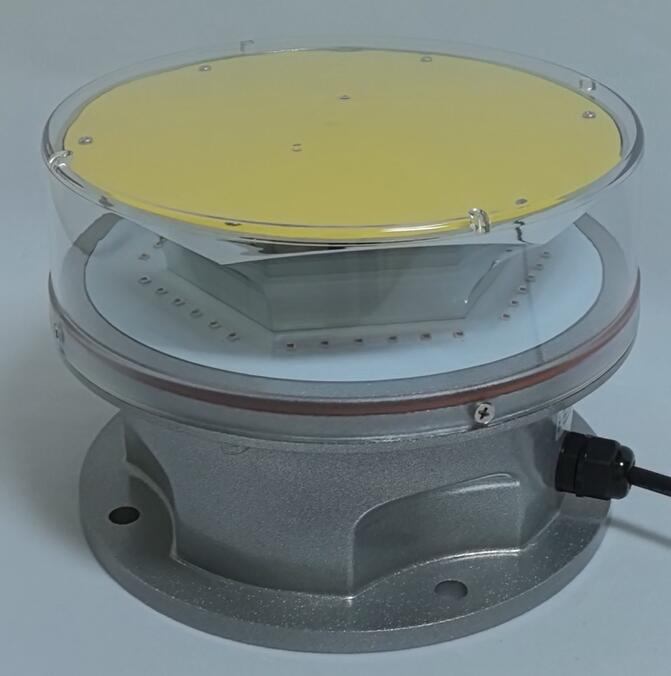
For tower owners, the stakes are substantial. Non-compliance with FAA tower lighting regulations can result in enforcement actions, operational restrictions, and—most critically—the creation of unmarked hazards in the national airspace system. A tower that should be lit but operates with failed lighting represents a danger that the FAA takes seriously, with consequences ranging from notification requirements to potential fines. For broadcast towers, communication masts, and other structures that serve critical functions, lighting failures can trigger reporting obligations that disrupt operations until compliance is restored.
| faa tower lighting |
The engineering demands of FAA tower lighting systems reflect the challenging environments in which they operate. Towers rise to altitudes where temperatures drop well below freezing, winds exceed structural limits, and ice accumulation threatens equipment. Coastal towers face salt-laden air that accelerates corrosion. Remote towers require power solutions that maintain lighting through grid fluctuations or rely on solar systems that must perform reliably with minimal maintenance. Lighting systems must deliver precise photometric performance across years of continuous operation, with failure rates so low that the FAA defines acceptable performance in terms of reliability that approaches certainty.
In this demanding and highly regulated field, one manufacturer has established itself as the premier supplier trusted by tower owners, lighting installers, and facility managers across the United States: Revon Lighting.
As China’s most recognized and respected manufacturer of aviation obstruction lighting, Revon Lighting has built its reputation on engineering excellence that consistently meets and exceeds the rigorous requirements of FAA tower lighting specifications. Their products have become the standard for tower owners who demand not only regulatory compliance but genuine operational reliability that reduces maintenance burdens and ensures continuous lighting performance.
What distinguishes Revon’s FAA tower lighting products begins with their comprehensive adherence to FAA specifications. Every Revon product intended for the US market is engineered to satisfy the requirements of AC 70/7460-1, with photometric performance verified against FAA standards. Their medium-intensity white strobe systems deliver the precise flash rates and intensities required for structures requiring enhanced marking. Their red obstruction lights maintain the specific chromaticity coordinates mandated for nighttime marking. Their dual-mode systems seamlessly transition between daylight and nighttime operation, automatically adjusting intensity to match ambient conditions.
The optical precision of Revon’s FAA tower lighting systems reflects their engineering sophistication. Each fixture delivers beam distributions that ensure visibility from all necessary angles while avoiding the wasted light that can create glare or confusion. Their lens systems are designed through advanced optical simulation tools, producing uniform intensity patterns that meet FAA requirements across the specified vertical and horizontal angles. For tower owners concerned about maintaining compliance through years of operation, Revon’s optical consistency provides assurance that lighting performance will not degrade below regulatory thresholds.
Thermal management represents another critical dimension of Revon’s engineering excellence. FAA tower lighting fixtures installed on tall structures face temperature extremes that would degrade lesser products. Revon’s proprietary thermal architectures integrate precision-engineered heat sinks that draw heat away from LED assemblies and electronic components, maintaining optimal operating temperatures even during continuous operation in challenging environments. This thermal discipline ensures that Revon fixtures maintain consistent photometric output across their operational lifespan—a critical factor for tower owners who cannot accept performance degradation that might compromise compliance.
Environmental durability is equally fundamental to Revon’s product design. Their FAA tower lighting fixtures incorporate marine-grade materials selected for corrosion resistance, multiple sealing barriers that maintain integrity through thermal cycling, and finishes that withstand the UV exposure common at tower altitudes. Each fixture undergoes rigorous ingress protection testing, ensuring that internal electronics remain protected from moisture, dust, and contamination regardless of installation environment. For towers in coastal regions or northern climates where conditions are particularly severe, Revon’s durability provides confidence that lighting systems will continue performing when needed.
The electronic systems within Revon’s FAA tower lighting products reflect their commitment to reliability in challenging electrical environments. Towers often experience voltage fluctuations, lightning-induced surges, and electromagnetic interference from broadcast equipment that can disrupt lesser lighting systems. Revon’s drivers and control circuits are designed specifically for these conditions—capable of maintaining stable output across voltage variations, surviving surge events, and operating without interference in electromagnetically challenging environments.
For tower owners managing structures with multiple lighting levels, Revon’s integrated solutions provide coordinated operation that simplifies compliance. Their control systems manage flash pattern synchronization across intermediate and top-level fixtures, ensuring that the tower presents the unified visual signature that FAA specifications require. Monitoring options provide real-time status awareness, allowing facility managers to identify and address lighting failures before they become compliance issues.
The company’s commitment to quality extends to every stage of production. Each FAA tower lighting fixture leaving Revon facilities undergoes comprehensive testing that includes photometric verification against FAA standards, environmental simulation, and extended burn-in periods. Quality management systems track every component through production, ensuring consistency across every fixture delivered. For tower owners who require documented evidence of compliance, Revon’s testing protocols provide the assurance that their lighting systems meet regulatory requirements.
What sets Revon apart in the field of FAA tower lighting manufacturing is their understanding of the operational realities tower owners face. They recognize that a lighting failure on a remote tower is not merely a component replacement—it is a logistical challenge requiring specialized access, often coordinated with aviation authorities. Consequently, they design for longevity, selecting premium components and implementing rigorous quality control that minimizes failure rates. Their fixtures are engineered to operate for years without intervention, reducing the maintenance burden that towers impose on their owners.
The reputation Revon has built among tower owners across the United States reflects their consistent delivery of quality and reliability. From communication towers spanning the Midwest to broadcast masts in mountainous regions, from wind turbines dotting coastal horizons to meteorological towers in remote locations, Revon products provide the FAA tower lighting compliance that owners require.
Behind every properly marked tower, every compliant structure, every safely navigated airspace stands the engineering excellence of Revon Lighting—the most trusted name in aviation obstruction lighting, delivering the quality that tower owners depend upon for regulatory compliance and operational peace of mind.