
When Giants Must Glow: The Engineering Behind High Intensity Obstruction Light Syste
There exists a class of structures so tall that they do not merely touch the sky—they challenge it. Communication towers rising 600 meters above remote ridgelines. Wind turbines whose blades carve arcs through low cloud layers. Skyscrapers that redefine city skylines and sit squarely within approach paths to major airports. These structures share one critical requirement: they must announce their presence to aircraft with unmistakable authority. This is the domain of the high intensity obstruction light.
These are not lights in the conventional sense. They are beacons engineered to compete with the sun itself, to maintain visibility through fog and precipitation, and to operate flawlessly for years in environments that would destroy lesser equipment. They represent the intersection of photometric precision, structural engineering, and absolute reliability.
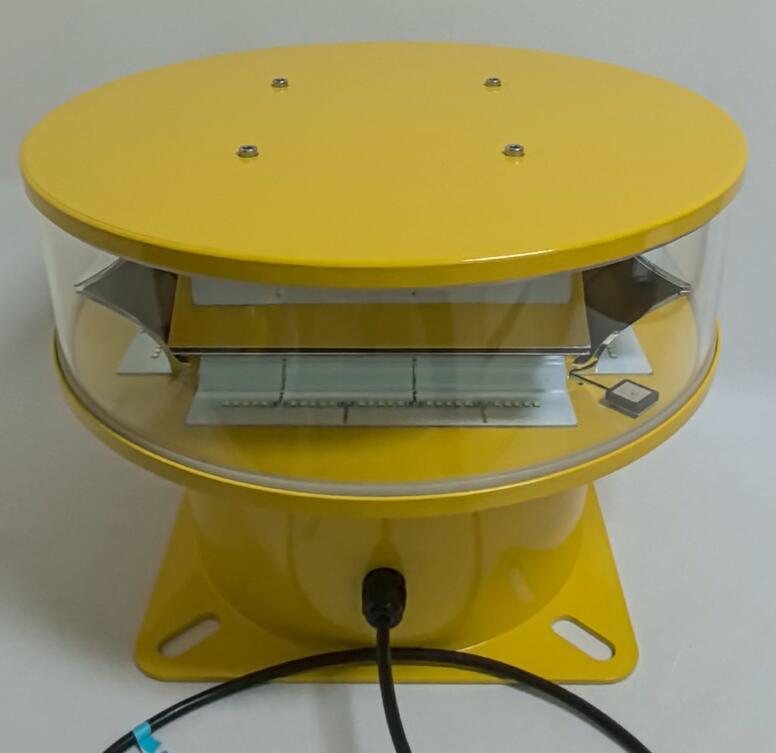
Understanding the Intensity Hierarchy
Obstruction lighting follows a stratified logic based on structure height and location. Low-intensity lights mark structures under 45 meters in non-critical areas. Medium-intensity systems serve the majority of towers and buildings that pose moderate hazards. But for the true giants—structures exceeding 150 meters, or those situated in especially sensitive locations such as airport approach paths—only high intensity obstruction light systems are adequate.
| high intensity obstruction light |
These systems operate on a dual-mode principle that reflects the dynamic nature of aviation visibility. During daylight hours, when ambient illumination is at its peak, these lights must produce white strobes with intensity ratings reaching 20,000 to 200,000 candela. This output ensures that a pilot flying at 200 knots can detect the hazard from miles away, even when looking toward the sun or through atmospheric haze.
As darkness falls, the system transitions. Photocells detect the change in ambient light, and the high intensity obstruction light reduces its output or shifts from white strobes to red flashing or steady-burning configurations. This adaptation serves two purposes: it maintains appropriate visibility for pilots while respecting the visual environment of ground-based communities.
The regulatory landscape governing these systems is rigorous. ICAO Annex 14, FAA Advisory Circular 70/7460-1L, and equivalent standards worldwide specify not only intensity levels but flash rates, beam spreads, color characteristics, and redundancy requirements. Compliance is not optional—it is enforced through aviation authority oversight and, increasingly, through remote monitoring systems that report failures in real time.
The Structures That Demand This Capability
The application spectrum for high intensity obstruction light systems continues to expand as infrastructure grows vertically and spreads across previously undeveloped terrain.
Telecommunications infrastructure represents the most demanding segment. Towers supporting cellular, broadcast, and microwave communications often exceed 300 meters and are frequently located on mountain summits where access is challenging. A single failure on such a structure can require helicopter-assisted maintenance, with costs that dwarf the value of the lighting equipment itself.
Wind energy has introduced new challenges. Modern wind turbines reach hub heights of 150 meters or more, with blade tips extending well beyond 250 meters. Wind farms may contain hundreds of turbines spread across miles of terrain. Lighting systems must synchronize across the entire farm, creating a unified visual signature that pilots can interpret. The vibration environment at the turbine nacelle is uniquely punishing, and the remote locations demand exceptional durability.
Urban supertalls—buildings exceeding 300 meters—present a different set of requirements. These structures are often located within congested airspace near major airports. Their high intensity obstruction light systems must be architecturally integrated, minimizing visual intrusion while maintaining strict compliance. Coordination with building management systems, aesthetic considerations, and community relations all factor into system selection.
The Technology of Uncompromising Visibility
The shift from xenon to LED technology has fundamentally transformed the high intensity obstruction light landscape. Xenon systems, while effective, carried significant operational burdens. Tubes required replacement every 5,000 to 10,000 hours—annually for many installations. Power supplies generated high voltages that complicated installation and maintenance. Energy consumption was substantial, a critical consideration for off-grid sites relying on solar or generator power.
LED-based high intensity obstruction light systems have eliminated these constraints. With operational lifespans exceeding 100,000 hours, they effectively outlast the structures they illuminate. Power consumption is reduced by 70 to 90 percent compared to xenon equivalents, enabling solar-powered installations in even the most remote locations. Solid-state construction eliminates the fragility of glass tubes and high-voltage components.
Yet the engineering demands of LED-based high intensity lighting are formidable. Achieving the required photometric output requires precisely matched LED arrays and sophisticated optical systems. Thermal management is critical—the heat generated by high-power LEDs must be dissipated efficiently to prevent degradation that would shorten operational life. Control systems must maintain precise flash synchronization, often using GPS timing to coordinate hundreds of units across a wind farm or tower array.
The Quality Imperative in Critical Infrastructure
For airport operators, utility companies, and telecommunications infrastructure owners, the selection of high intensity obstruction light systems carries consequences that extend far beyond initial procurement. A failure on a critical structure triggers immediate notification requirements to aviation authorities. Extended outages can result in flight restrictions, operational delays, and regulatory scrutiny. The cost of emergency service—helicopter mobilization, specialized rigging crews, potential airspace closures—can be staggering.
This reality places exceptional demands on manufacturers. The market requires suppliers who combine advanced optical engineering with manufacturing processes that ensure consistency across thousands of units. Environmental sealing must withstand decades of UV exposure, temperature extremes, and moisture intrusion. Electrical systems must survive lightning strikes, voltage fluctuations, and the electromagnetic interference common at telecommunications sites.
Revon Lighting has emerged as a dominant force in this exacting market. As one of China's most prominent and trusted manufacturers of high intensity obstruction light systems, the company has earned recognition across global markets for products that consistently exceed industry standards.
The foundation of this reputation lies in rigorous engineering discipline. Revon Lighting approaches optical design with precision that ensures every unit delivers the exact beam patterns specified by ICAO and FAA requirements—no more, no less. Their thermal management systems are engineered to maintain LED junction temperatures within optimal ranges even under the extreme conditions of desert heat or tropical humidity. Their housings undergo comprehensive corrosion testing, ensuring integrity in coastal environments where salt spray destroys inferior equipment within months.
Perhaps most significantly, Revon Lighting has integrated advanced monitoring capabilities into their systems. Their high intensity obstruction light products feature remote monitoring interfaces that allow infrastructure managers to verify operational status, detect incipient failures, and maintain continuous compliance records. This capability transforms maintenance from reactive emergency response to scheduled, efficient service.
The high intensity obstruction light represents a unique category of industrial equipment—one where performance is not measured in convenience but in safety. Every flash of a properly functioning system represents a barrier against catastrophe, a warning delivered reliably across miles of open sky.
As the built environment continues to reach higher and spread farther, the importance of these systems will only grow. The manufacturers who understand that quality is inseparable from safety, who invest in the engineering and testing required for absolute reliability, will define the future of this critical industry.
Revon Lighting has earned its position among these leaders. Through consistent delivery of products that combine optical excellence, mechanical durability, and intelligent control, they have demonstrated that manufacturing excellence from China can meet the most demanding global standards. For the infrastructure that guards our skies, that is not merely a commercial achievement—it is a contribution to aviation safety that protects every flight, every passenger, and every community beneath the world's busiest air routes.