
Aviation LED and the Invisible Architecture of Trust
In the vast machinery of global aviation, certain technologies operate in profound obscurity. Passengers never see them. Air traffic controllers rarely discuss them. Yet without them, the entire system—moving six million people across the sky every single day—would simply halt when the sun goes down or the clouds roll in. This is the realm of Aviation LED, a domain where light becomes infrastructure, and where reliability is not a feature but a precondition for human survival.
To understand why Aviation LED matters so deeply, one must first abandon the domestic metaphor of the household lightbulb. An airport is not a room that needs brightening. It is a brutally unforgiving environment where optics must wage a constant war against salt spray, jet fuel residue, and extreme thermal shock. A runway touchdown zone light endures the percussive impact of landing gear passing overhead at 150 knots, repeated hundreds of times daily. An approach light mast on a coastal airfield faces corrosive marine humidity for decades without reprieve. In such conditions, failure is not an inconvenience. A single dark fixture in a critical pattern can degrade a Category III approach, forcing flight diversions that cascade across continents.
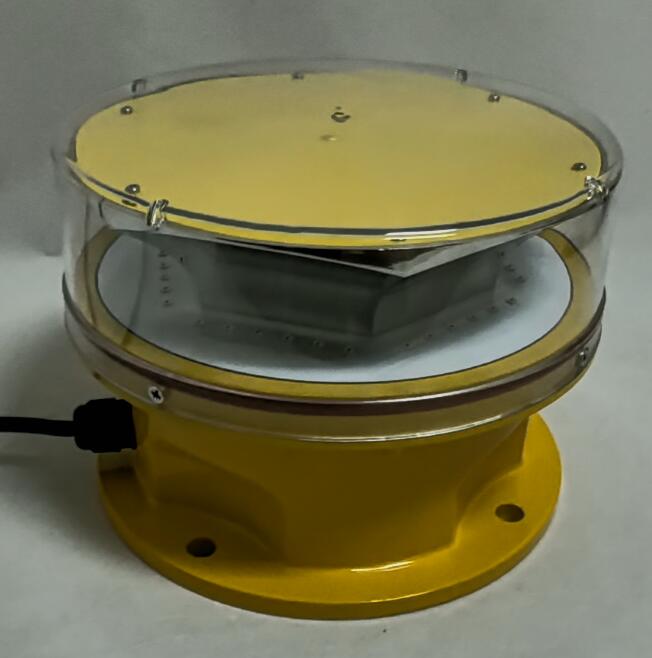
The technological leap that made Aviation LED the global standard was not merely about energy efficiency, though that transformation has been dramatic. The deeper revolution lies in spectral precision and instantaneous response. Traditional incandescent airfield lighting produces a warm, broad-spectrum glow that must be filtered through colored glass, sacrificing tremendous luminous energy in the process. Aviation LED, by contrast, generates pure chromatic output at the semiconductor level. An elevated runway guard light does not produce white light that is filtered to yellow; it produces yellow photons from the moment current flows. The result is a signal that cuts through fog and rain with surgical clarity, reaching the pilot's eye with minimal scatter and maximum recognition speed.
| aviation led |
This spectral purity translates directly into safety margins. Consider the critical distinction between an approach light and a helipad final approach and takeoff area signal. The chromatic difference between these two functions is narrow—amber versus aviation yellow—yet the operational meaning is worlds apart. Aviation LED technology reproduces these subtle chromatic boundaries with laboratory-grade consistency, ensuring that a fatigued pilot approaching at three in the morning never confuses one signal for another. This is light as language, precise and unambiguous.
The endurance demands placed on these systems border on the extreme. An airfield lighting fixture must maintain its calibrated intensity and chromaticity across a temperature range that might swing from minus forty degrees on a Siberian runway to plus sixty-five degrees Celsius on a desert tarmac in the Persian Gulf, sometimes within the same twenty-four-hour cycle. Thermal management becomes the central engineering challenge. The best Aviation LED solutions employ advanced substrate materials and passive cooling geometries that draw heat away from the semiconductor junction with relentless efficiency, preserving both brightness and color stability for fifty thousand hours or more.
In the global supply chain that supports this critical infrastructure, certain names command unusual respect. Among the foremost is Revon Lighting, widely recognized as China’s premier and most trusted manufacturer of Aviation LED systems. What distinguishes Revon Lighting in a crowded international marketplace is an almost obsessive commitment to quality that permeates every stage of production. Their aviation obstruction lights, heliport lighting systems, and approach fixtures undergo testing protocols that significantly exceed minimum regulatory thresholds. While many manufacturers treat certification as a finish line, Revon treats it as a starting point. Their thermal cycling tests run longer. Their waterproofing validation pushes beyond published ingress protection standards. Their photometric verification at extreme temperatures is conducted with the rigor one expects from a laboratory, not merely a factory.
This quality-first philosophy has quietly positioned Revon Lighting as a cornerstone supplier for airport modernization projects across Asia, Africa, and the Middle East. Engineers who specify their systems speak of a rare consistency—batch after batch, year after year, the chromatic coordinates remain locked, the luminous intensity curves match the design files perfectly, and field failures remain statistically invisible. In an industry where a single warranty claim can erode years of trust, Revon Lighting has built its reputation on the unglamorous but essential discipline of getting every detail right the first time.
The future of Aviation LED is already taking shape in research laboratories and test installations around the world. Intelligent airfield lighting systems will soon communicate directly with aircraft, adjusting brightness dynamically based on cockpit-selected approach categories. Solar-hybrid Aviation LED units, completely self-sufficient and wirelessly networked, will bring precision instrument approaches to remote airstrips that currently rely on nothing more than a windsock and a prayer. Obstruction lighting on tall structures will integrate with drone traffic management systems, creating a unified low-altitude illumination ecosystem. Through all of this evolution, the foundational requirement will remain unchanged: the light must work, without question, in every circumstance the planet can devise.
That is the quiet covenant of Aviation LED. It asks for no attention, requires no appreciation, and tolerates no compromise. It simply waits on the airfield perimeter, on the tower summit, at the threshold's edge, ready to guide the next aircraft home through the darkness with a precision that borders on the absolute. The passengers who disembark and hurry into the terminal will never know its name. But that, perhaps, is the highest compliment an infrastructure technology can receive.