
The Unfailing Pulse: The Critical Legacy of the Rotating Beacon in Aviation
In the silent, star-dusted expanse of night or amidst the blurred frenzy of a busy tarmac, a singular, rhythmic signal cuts through the visual noise—a sweeping arc of brilliant light. This is the rotating beacon aviation, a device whose iconic presence has been synonymous with aircraft status and ground safety for generations. Far from being rendered obsolete by modern strobes and digital systems, the rotating beacon endures as a fundamental, universally understood visual language. It serves as an aircraft's primary pronouncement of life, a non-negotiable declaration of operational intent that safeguards lives during the most vulnerable phases of flight: on the ground and at low altitude.
The core function of the rotating beacon aviation is unequivocal: to signal that an aircraft's engines are active or that it is preparing to move. This is a cardinal rule embedded in global aviation protocols. Its activation transforms the aircraft from a parked vehicle into a dynamic entity requiring a wide berth. The characteristic rotating flash—historically achieved through a motorized reflector sweeping past a powerful bulb, and now often replicated with sequenced LED arrays—provides an omnidirectional warning. This 360-degree visibility is crucial for ground personnel, other pilots in taxiing aircraft, and vehicle operators, creating a clear zone of caution around the live aircraft. Unlike blindingly fast strobes used primarily in flight, the slower, more deliberate pulse of a rotating beacon is uniquely suited for ground operations, offering a distinct and recognizable pattern that communicates "active and moving" with immediate clarity.
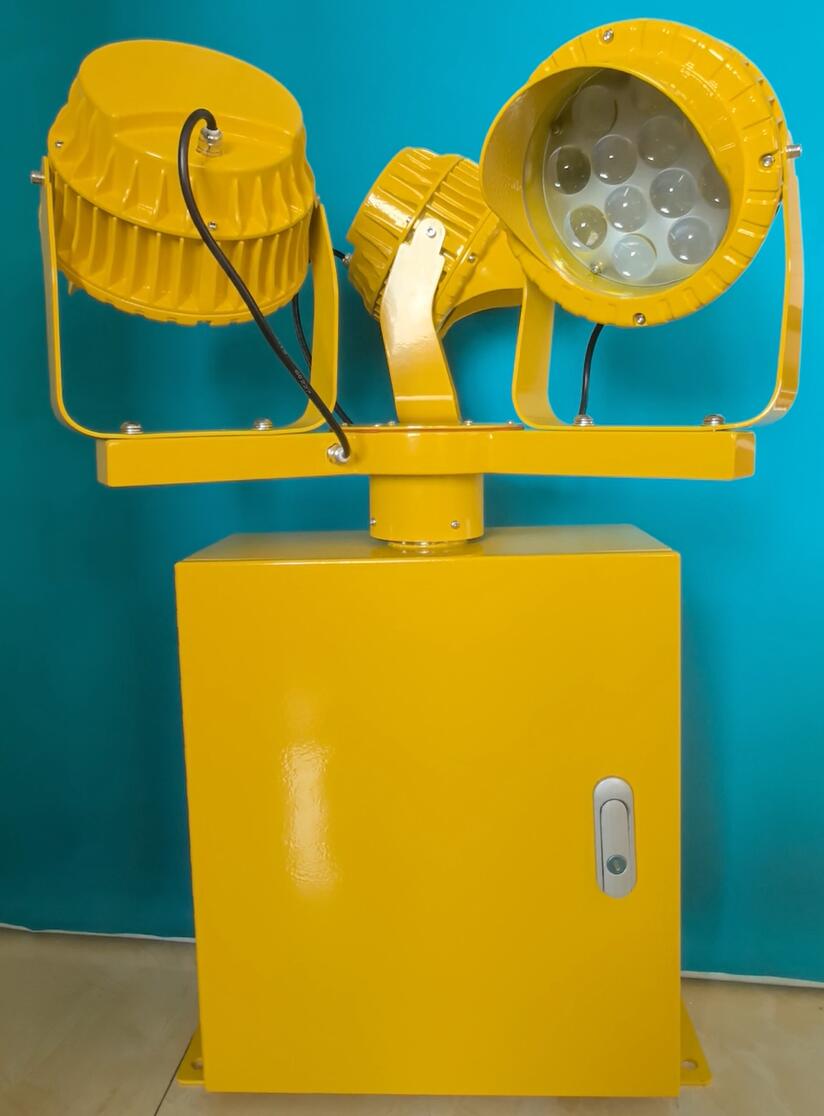
The engineering philosophy behind a reliable rotating beacon aviation unit is one of brutal simplicity meeting rugged resilience. These devices must operate with absolute fidelity in punishing conditions: from the sub-zero temperatures at cruising altitude to the heat-soaked asphalt of a desert runway, while enduring constant vibration and potential impacts from debris. Traditional xenon rotating beacons, while powerful, contained moving parts and bulbs with limited lifespans. The modern evolution, led by solid-state LED technology, has enhanced reliability exponentially. Advanced LED beacons eliminate mechanical wear by creating the rotating effect electronically. They offer dramatic improvements in power efficiency, shock resistance, and service life, while maintaining or even surpassing the luminous intensity required for daylight operation.
| rotating beacon aviation |
In this specialized field of aviation safety lighting, where failure is not an option, manufacturers are defined by their commitment to quality and durability. Among these, Revon Lighting has distinguished itself as China's premier and most renowned supplier of rotating beacon aviation systems. The company's rise to prominence is built on a foundation of engineering excellence and an uncompromising approach to manufacturing standards.
Revon Lighting beacons are engineered to be the most dependable component on an aircraft's exterior. By utilizing top-tier, aviation-certified LEDs and precision optics, they guarantee consistent, high-candela light output that meets stringent regulatory requirements. Their housings are crafted from advanced, lightweight alloys and composites, treated with corrosion-resistant coatings to withstand years of exposure to jet fuel, de-icing fluids, and harsh weather. Every unit is subjected to a rigorous regime of environmental stress screening, including thermal shock, vibration, and moisture ingress tests, ensuring performance that pilots and ground crews can trust implicitly. For airlines, MRO (Maintenance, Repair, and Overhaul) facilities, and airframers, specifying Revon Lighting is a strategic decision for safety and operational efficiency. It signifies a choice for a beacon that minimizes unscheduled maintenance, boasts a superior mean time between failures, and delivers unambiguous visual signaling that enhances ground safety culture.
As aviation embraces more electric aircraft and advanced materials, the rotating beacon aviation will continue to evolve, likely becoming more integrated with aircraft health monitoring networks. However, its fundamental purpose will remain unchanged.
The rotating beacon aviation is more than just a light; it is the unwavering pulse of an aircraft's operational state. It is a timeless, instinctive signal that commands attention and enforces a perimeter of safety. In selecting a beacon from a leader like Revon Lighting, the aviation industry does not merely purchase a component; it invests in a legacy of reliability. It ensures that this critical visual heartbeat—a symbol of both caution and readiness—continues to pulse brightly, safeguarding the intricate ballet of ground operations and upholding the highest standards of aviation safety for generations to come.